
Stop Calling It "BOJ Yen Intervention"

Japan & US Are Buying The Yen
There Is No “Burning Of Money” By BoJ or MoF
Japan is Taking Profits On Rising USD
Japan & US Are Buying The Yen
We are told that the BOJ is spending $58 billion on intervening in the FX market to support a falling yen that is contributing to US rising yields and dollar.
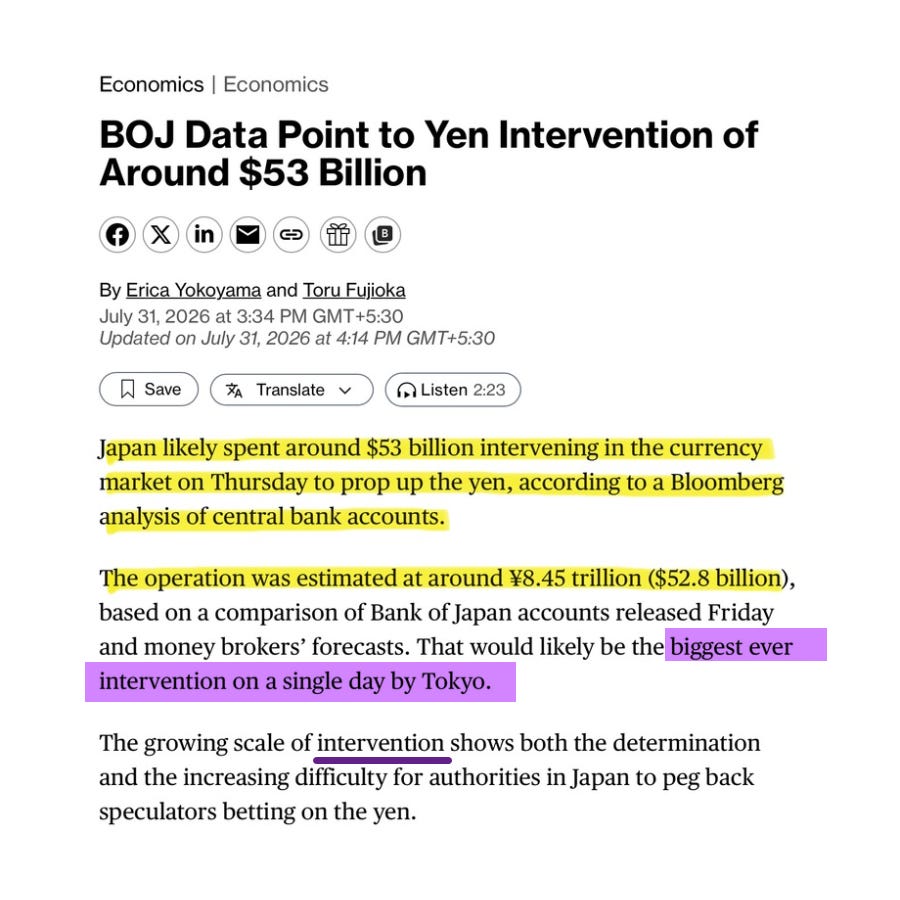
Followed by Bessent saying Friday that the yen is undervalued so they will buy it too.
US Treasury has informed banks that it may intervene in the yen market today.
No wonder markets bounced Thursday! We are talking COORDINATED INTERVENTION - between Japan and US - implying the selling of dollars and buying of yen.
And why now? Because most hold the assumption that a yen depreciation can force the BOJ to raise rates more rapidly, which triggers a yen that appreciates too rapidly, forcing the dreaded ‘yen carry trade unwind’ in the US (global) equity and treasury markets.
Line of thinking goes generally like this:
Rapid yen depreciation → BOJ forced to hike → yen surges → carry trades unwind → global leverage gets liquidated.
But the BOJ telegraphed that they would hike rates in June, which they did, and nothing nefarious happened. In fact, yen kept falling and US equities kept chopping sideways as the dispersion unwind occurred in the AI trade under the relative calm of the indices.
Long story short, most are focused on BOJ rate hikes as bearish equities. But BOJ has hiked 5 times since early 2024 and equities have marched higher with yields.
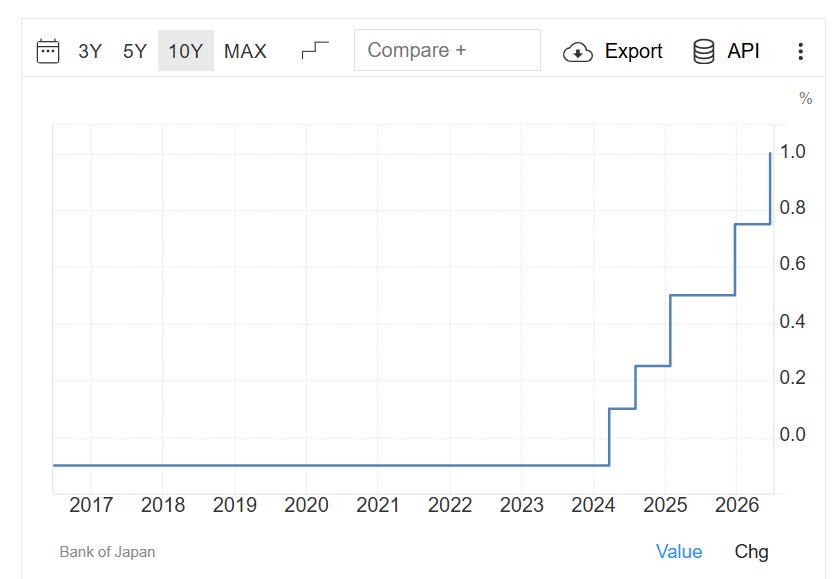
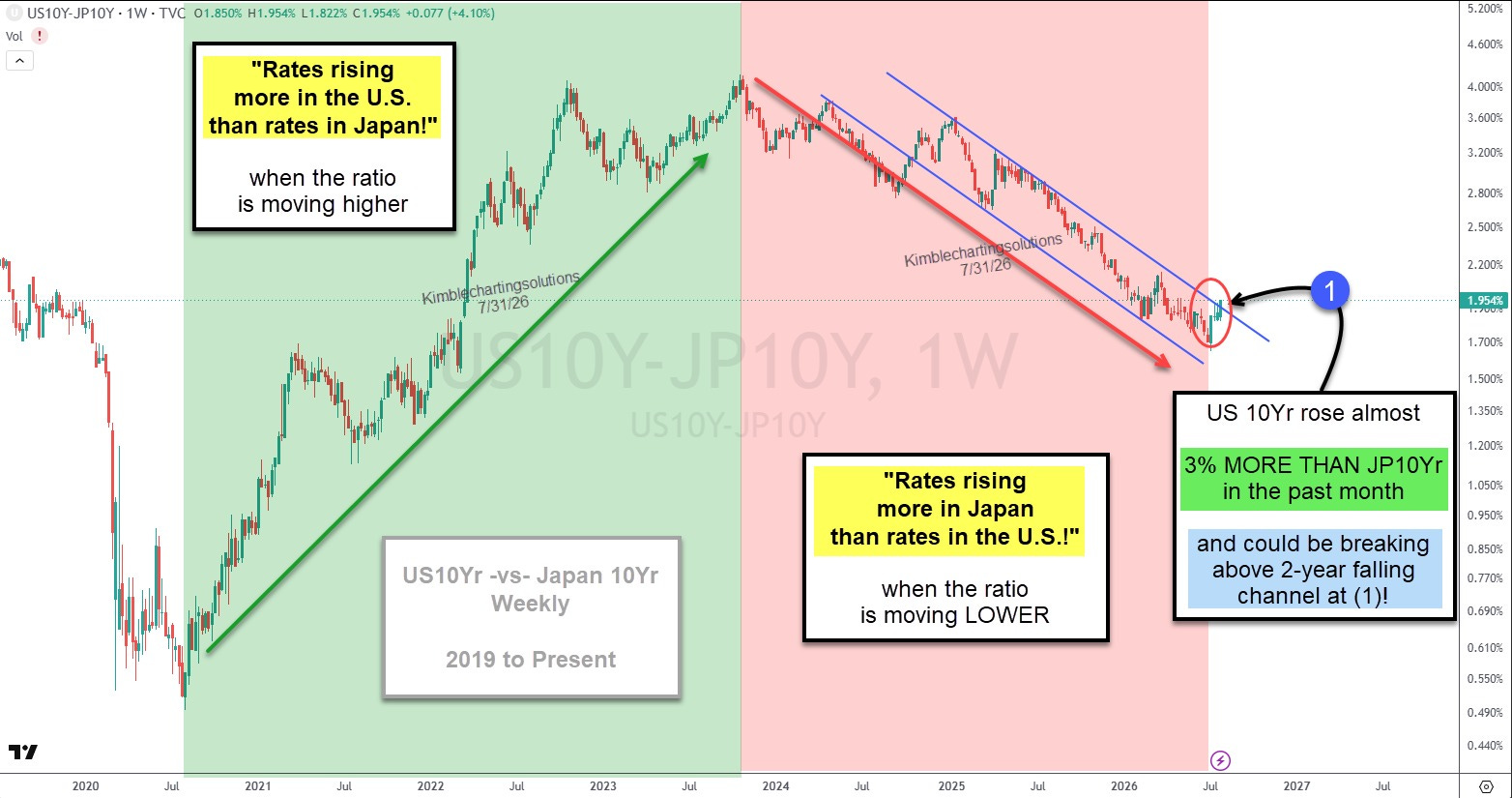
The crux of the issue is this: a much-faster pace of stronger inflation data in Japan has created a rate differential divergence of size between US and Japan’s 10Y yields.
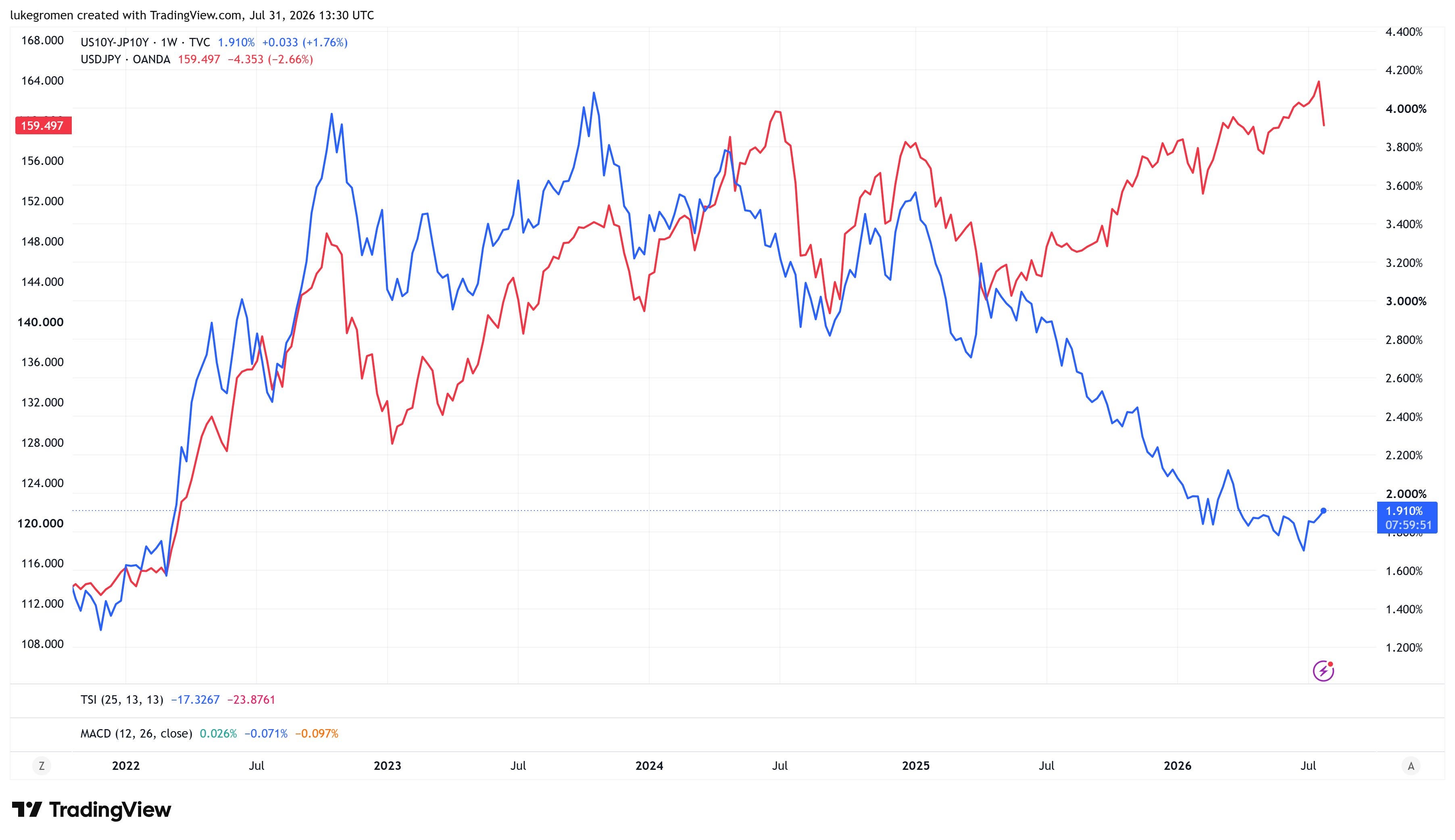
But in the last month, the US yields have risen faster than Japan’s:
MACRO CHEAT SHEET:
Currency volatility drives rate volatility drives equity volatility.
A too-strong JPY blows up the JPY carry trade, while a too-strong USD blows up the USD carry trade.
And that is what officials are guarding against.
But when we see “yen Intervention”, it is important to highlight that it isn’t just a policy intervention to suppress volatility and keep markets functioning smoothly. It is also a harvesting of gains by Japan on a rising USD!
There Is No “Burning Of Money” By BoJ or MoF
I’ve made the mistake myself, calling what happened yesterday with the 3.5% USDJPY MOVE a “BOJ Intervention”. I’m not alone, and I don’t want to call anyone out, but I’m not sure anyone on X or the media has a firm grip of the monetary plumbing that is occuring in Japan. So I want to have Geoffrey, our Classical Economist on our LaDucTrading bench, explain what is happening that causes the yen’s outsized currency volatility which pulled the DXY down violently same time.
There is no "burning of money" whatsoever from the MoF.
If you trace the T-accounts, there is ZERO net selling of USD for JPY in the Japanese financial system.
Why?
The USD acquired by selling UST by the MoF and sold by the MoF for Yen are re-acquired by Japanese Banks.SO net net? ZERO sell of USD for YEN in JAPAN!!!!!
There is just a temporary hiccup.
What a bunch of amateur folks see as "Intervention failing" is just a time mismatch because net net? ZERO USD sales for JPY.
What really matters:
a) rate differential
b) QT by the BoJ
c) Agressive shifting of consumer bills to Tepco (imported nat gas electricity) for Solar rootfop electricity. That cuts the demand for USD and nat gas for Japan.
US is the country with the external debt problem and pressure on base curve - NOT JAPAN.
From the standpoint of the MoF though - since their liabilities are in Yen - a higher price in Yen for the sale of UST covers more Yen liability.
However as a result of that move:
a) Japanese banks don't need to pay expensive dollar swaps to get funding in USD and to international lending in USD because they just acquired USD assets. Their profitability increases!
b) It pressurizes the non-Japanese banking system and warsh' base rates because MoF is selling long duration UST while banks acquire short duration (T-Bills).
c) It puts pressure on USD denominated hedge funds which have to absorb more duration. And it means that the Fed has to continue the "reserves management" started in Dec 12th because otherwise we would continue to have spikes on US interbanking and repo.
d) It makes the Japanese banks more liquid because instead of having to procure dollars via swap, they just got T-Bils.
Obviously, this is but a cheeky summary. Geoffrey has provided deep-dives into the monetary plumbing that is Japan. This level of insight and granularity is not for everyone so I am not posting here, but if you want access to Geoffrey’s insights, deep research and trades… you can find them here:
Japan is Taking Of Profits On Rising USD
“The MoF has liabilities in Yen so the higher they can sell their UST in Yen the more Yen liabilities they can cover.” Geoffrey Fouvry
What prompted me to write this post is the same sentiment that EDGE Client Brian posted to me in DM today:
“If you told me yesterday that rates were going to be at a 1 year high and aapl was down 10% today, I would have bet the farm on spy puts.”
But we aren’t crashing. Markets are bouncing strongly!
I expected this post-FOMC even before the yen intervention, but the falling dollar has most certainly helped bid equities!

So this post hopefully accomplishes a few things:
This is not BOJ but MOF in Japan, taking advantage of rising USD - at the same time the US would like the dollar to come back in to support stocks.
When the MoF sells UST for Yen it is just a matter of accounting - not a matter of theater.
The Japanese buyers are Japanese banks that focus on short-term duration assets - leaving long duration asset holders with USD-denominated hedge funds.
We are not yet at a point of ‘yen carry trade unwind’ risk - at least not until Japan has decoupled from US energy dependency.
Geoffrey is a must-follow, must-have economics advisor on your team - and we invite you to join us at LaDucTrading to access his detailed analysis on this subject:
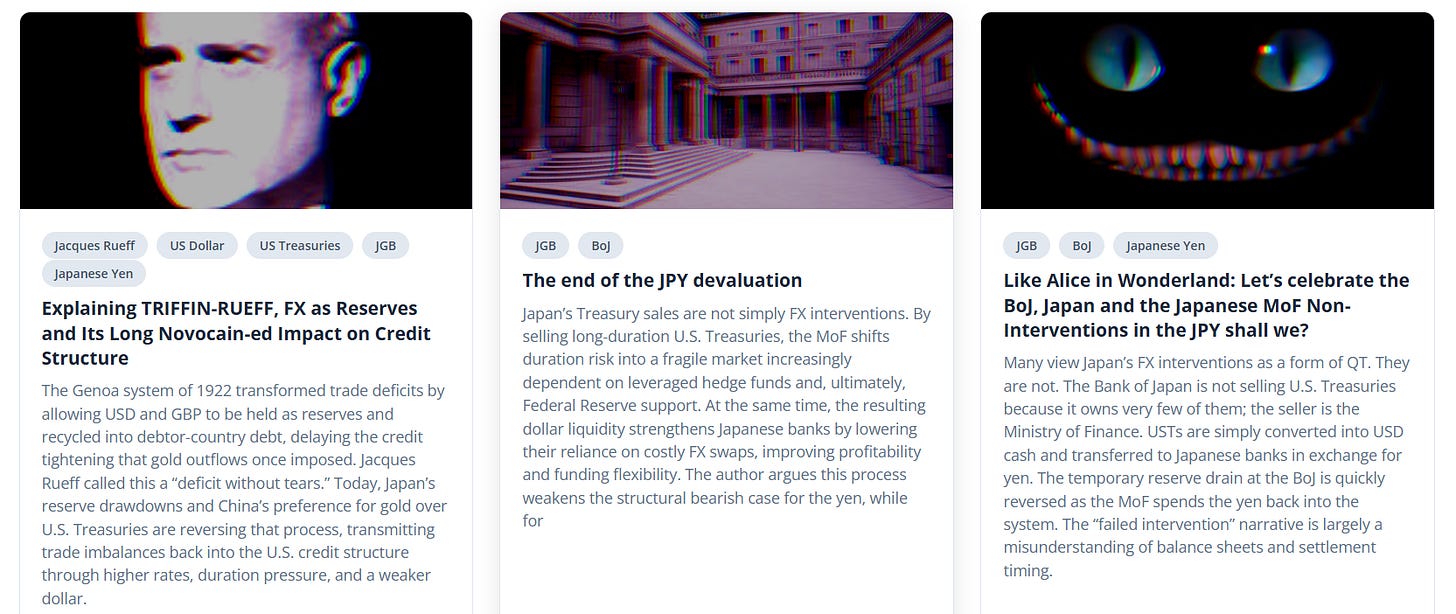

The outsized move in the USDJPY Thursday was a result of all of the above. Geoffrey adds:
I think that there are a lot of speculators shorting the Yen for the wrong reasons. But QT with the BoJ is the REAL intervention.
As is the non-reversible trend in substituting US sources of energy in Japan.
So next time you see a headline for “BOJ Yen Intervention”, hopefully you will consider this article and also remember the trade:
What’s the trade in Japan?
- Neutral to MoF on USD/JPY because the USD are re-acquired by Japanese Banks
- Positive for Japanese banks as it gives them more liquidity and profitability.
What’s the trade outside Japan?
- Negative for bonds
- Negative for liquidity in the banking system that needs to absorb long-term treasuries which are stuffed on to USD denominated hedge funds.
So many are focused on Japan’s economic health but forget that they have a massive trade surplus, robust loan growth and no external debt problem - the opposite of the US.
And now they are shortening their UST duration while profiting in the process.
That’s a good trade for Japan.
Every major market rally of the last twenty years has eventually run through a government balance sheet. We're run by hedge fund managers. I think it's fair to point out that the MOF directs the BOJ here, and perhaps Reuters gets it wrong (and thus most people do before they can actually see the plumbing and balance sheets - which was something I said this morning), and this technically flips the narrative around the idea that it's defending the yen and burning money against selling the dollar.
But this is still policy driving markets at periods of extreme stress.
And that's the thing that keeps happening over and over and over.