

Macro-To-Micro In A Nutshell
New Fed RMP ‘Not QE, QE’ -
Think of this new Fed alphabet soup as a liquidity flush for the plumbing system so that all the other junk in there flows smoothly.
“Numerous repo fortifications, paired with oversized bill operations, reveal officials in the short and long term won’t rest until they impose a significant cap on SOFR.” via Conks
This is basically the argument for a soft landing via Fed “plumbing” and policy easing to manage the money market, TGA, Repo, and SOFR volatility.BUT, Conks warns:
this is “devoid of any meaningful easing outside money markets. Equities will need to rely on other forces to further climb the wall of worry.”
Enter, A Politicized Fed -
Expected Fed policy is expected to be politicized. Add to that, the Trump Administration is pitching a productivity boom, falling inflation and emphasis on Fed lowering rates to stimulate growth.
In fact, Trump is so confident we have already won the war on tariffs, drugs and inflation, he says we’ve taken in over $18 trillion in tariff revenue over the last 10 months.
No, there hasn’t: According to the Treasury Dept FY2025 report, the US took in $195 billion in duties.
Neither Tariffs Nor Inflation Will Be Refunded -
The Trump administration is racing to deposit the money it’s raised from tariffs into the U.S. Treasury, a tactic that could make it harder for companies to get refunds for duties the Supreme Court may strike down in the coming months. Via Politico
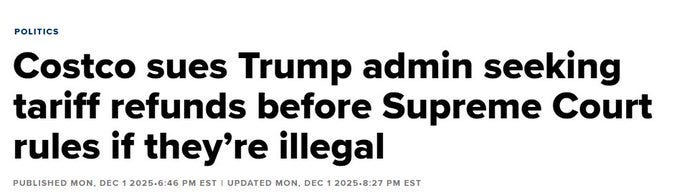
Costco isn’t waiting. COST filed a lawsuit against the Trump administration December 1st seeking the return of tariffs that they claim illegally increased its costs - forcing it to inflate its prices and forcing them to that cost on to consumers.
Do you think if they win, or tariffs are rescinded in part, that Costco or any other retailer for that matter will lower prices? Only when demand falls, which they say is falling. In addition, they claim that they are removing some products because of high prices that consumers no longer can afford.